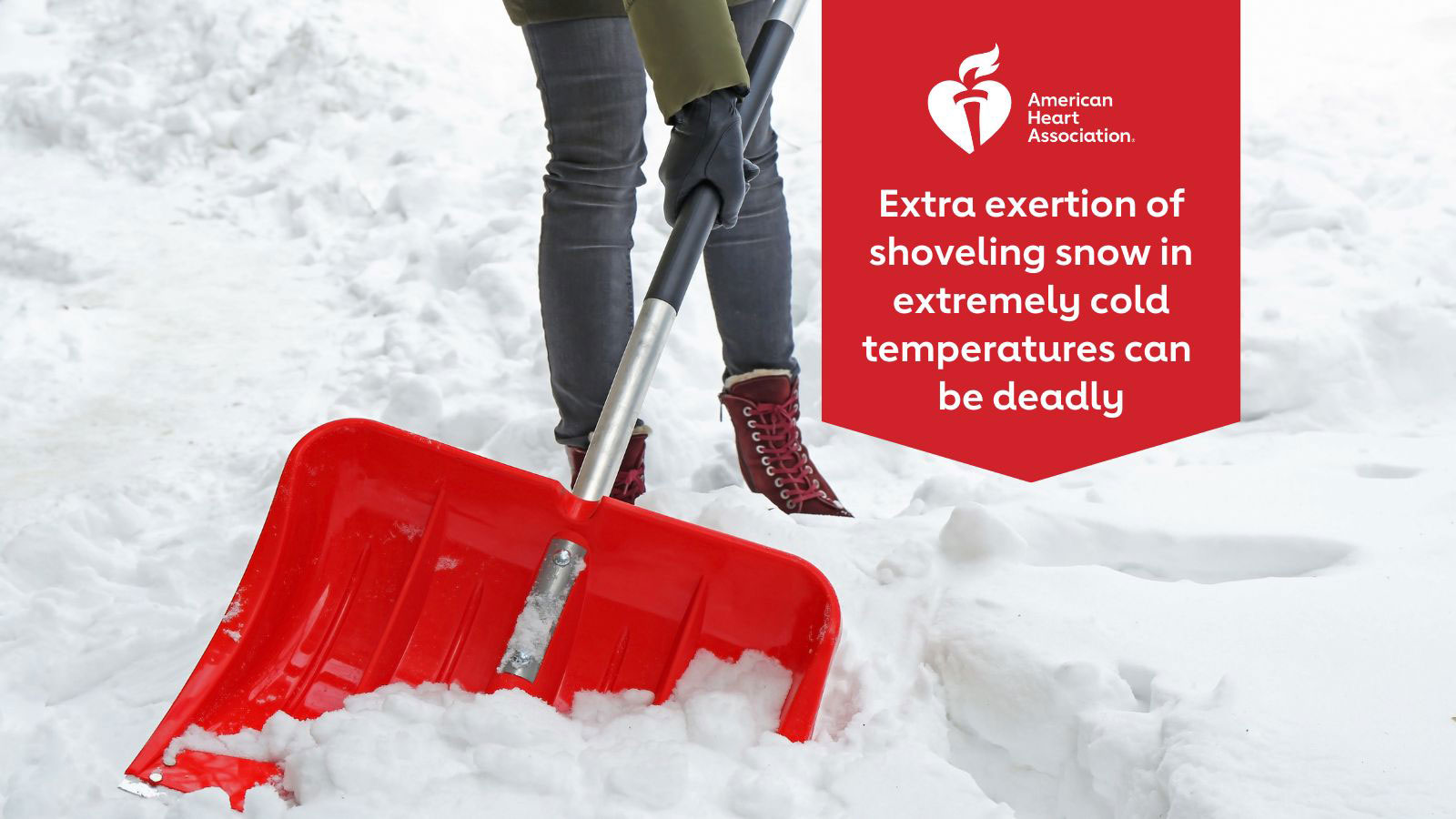
Walking in a winter wonderland may sound serene and peaceful, however, shoveling your sidewalks to take that walk could quickly change delightful to deadly. According to the American Heart Association, the world’s leading nonprofit organization focused on heart and brain health for all, research shows that the exertion of shoveling snow may lead to an increased risk of a heart attack or sudden cardiac arrest.
The American Heart Association’s 2020 scientific statement, Exercise-Related Acute Cardiovascular Events and Potential Deleterious Adaptations Following Long-Term Exercise Training: Placing the Risks Into Perspective–An Update, notes snow shoveling among the physical activities that may place extra stress on the heart, especially among people who aren’t used to regular exercise. Numerous scientific research studies over the years have identified the dangers of shoveling snow for people with and without known heart disease.
Heavy snow shoveling can put significant strain on the heart, similar to the intensity of a treadmill stress test. When combined with extremely cold temperatures, this creates a dangerous situation that can trigger heart-related events, especially for individuals who are less physically fit.
There are several ways snow shoveling affects heart health:
- The act of shoveling snow is mostly arm work, which is more taxing and demanding on the heart than leg work.
- While straining to lift heavy loads, such a shovelful of snow, you often unconsciously hold your breath, which causes big increases in heart rate and blood pressure.
- Exposure to cold air causes constriction of blood vessels throughout the body, disproportionately raising blood pressure and simultaneously constricting the coronary arteries.
The impact of snow removal is especially concerning for people who already have cardiovascular risks like a sedentary lifestyle or obesity, being a current or former smoker, having diabetes, high cholesterol or high blood pressure, as well as people who have had a heart attack or stroke.
Here are some tips to help reduce the increased risk from snow shoveling:
- If you have known or suspected heart disease or risk factors for heart disease, get someone else to do your snow removal for you!
- If you must shovel the snow, start gradually and pace yourself. Always cover your mouth and nose, wear layered clothing, as well as a hat and gloves.
- Ideally, push or sweep the snow rather than lifting and throwing it, that action involves a little less exertion.
- Be extra careful when the wind is blowing, the wind makes the temperature feel even colder than it is and will increase the effects of the cold on your body.
- If you are able, use an automated snow blower rather than shoveling. While you should still proceed with caution and be mindful of how your body is feeling, research shows that using a snow blower doesn’t raise your heart rate quite as high as shoveling.
The American Heart Association urges everyone to learn the common signs of a heart attack and stroke. If you experience chest pain or pressure, lightheadedness or heart palpitations or irregular heart rhythms, stop the activity immediately. Call 9-1-1 if symptoms don’t subside shortly after you stop shoveling or snow blowing. If you see someone collapse while shoveling snow, call for help and start Hands-Only CPR if they are unresponsive with no pulse.
Learn more about cold weather and cardiovascular disease heart.org.