
















Winter Wonders in the Night Sky Over NEPA
It can be tempting to hibernate indoors as the days grow shorter and the temperatures drop, but the night sky along the Susquehanna Greenway & NEPA has other plans. Autumn and winter bring some of the most dazzling celestial displays of the year—perfect for those crisp, clear nights when the stars seem to shine a little brighter.
From meteor showers that streak across the heavens to lunar showcases that illuminate the river below, these natural spectacles offer the perfect reason to bundle up, step outside, and rediscover the wonder of the Susquehanna River after dark. Here are a few nighttime happenings worth looking up for this season.
Meteor Showers
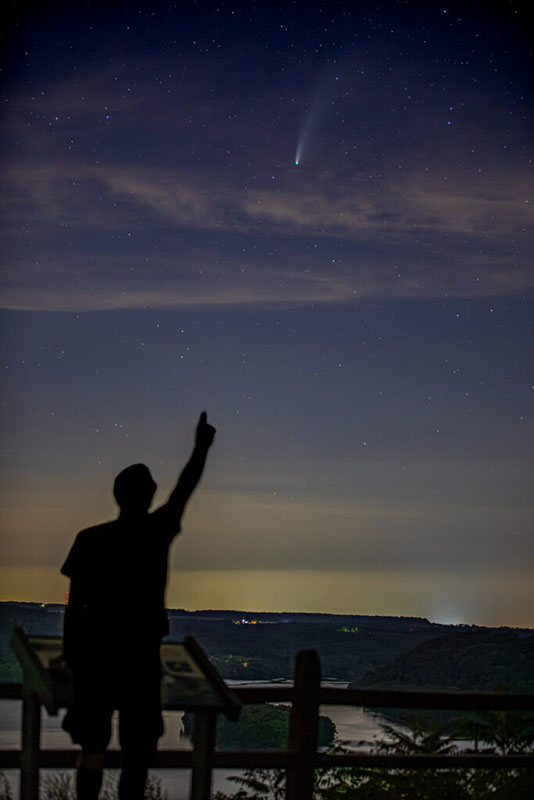
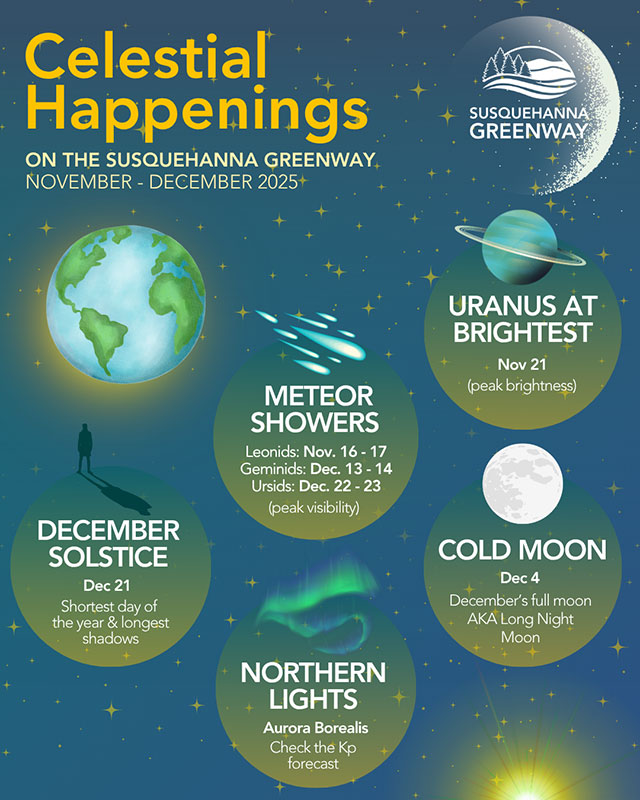
Leonids (Peak November 16–17): The Leonids light up the November sky with fast, bright streaks, often leaving glowing trails. Active November 3–December 2, they appear in the constellation Leo, which rises after midnight, making early morning the best viewing time. Find a dark spot along the Susquehanna Greenway, bundle up, and watch the eastern sky for this crisp autumn display.
Geminids (Peak December 13–14): Widely regarded as the year’s most spectacular meteor shower, the Geminids can produce up to 120 meteors per hour. Active November 19–December 24, they appear in Gemini, visible from evening through the night. In 2025, a waning crescent moon will provide ideal dark-sky conditions. Grab a blanket and hot cocoa, and enjoy streaks of green, white, and yellow light over the river.
Ursids (Peak December 22–23): Rounding out the year, the Ursids offer a quieter show just before Christmas, with 5–10 meteors per hour. Patience is rewarded with serene flashes in the winter sky—perfect for a peaceful night along the Greenway.
With clear skies and a bit of patience, these seasonal showers provide some of the most dazzling sights of the year!
Uranus at its Brightest

On November 21, Uranus reaches opposition, the point when it lies directly opposite the Sun in our sky and shines at its brightest for the year. Rising in the east at sunset and setting in the west at sunrise, the planet will remain visible all night long. Though faint to the naked eye, it can be glimpsed under very dark skies, while binoculars or a small telescope will reveal a steady, greenish-blue disk glowing among the stars of Taurus, where it will linger through April 2026.
Uranus stays near peak brightness from mid-October through mid-December, offering plenty of opportunities for viewing—especially from rural spots along the Susquehanna Greenway with minimal light pollution. Discovered in 1781 by William Herschel, Uranus was the first planet found with a telescope, and the first new world added to our solar system in modern times.
The Cold Moon
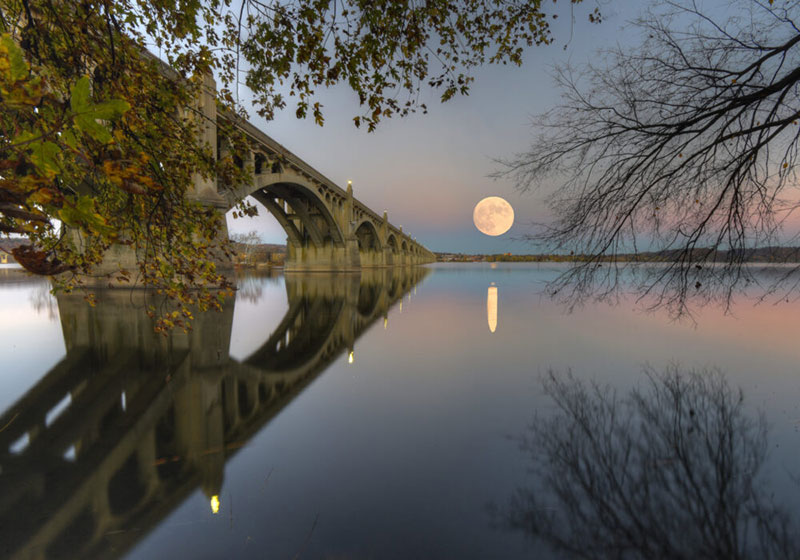
December marks the time when winter fully takes hold across much of the Northern Hemisphere, and the season’s first full moon on December 4 beautifully reflects that shift. According to the Old Farmer’s Almanac, the Mohawk people referred to December’s full moon as the Cold Moon to capture the moment when winter’s chill truly begins to settle in.
This full moon is also known as the Long Night Moon, as it rises near the winter solstice, when nights are longest, and the moon remains above the horizon for an extended period—longer than most other full moons of the year. Its steady, silvery glow provides a fitting light for the season, illuminating the longest nights with quiet brilliance—perfect for viewing nighttime landscapes of the Susquehanna Greenway.
To find the exact time the Cold Moon will rise in your area, visit the Old Farmer’s Almanac Moonrise and Moonset Calculator and enter your location. Wherever you’re watching from, take a moment to step outside, breathe in the crisp winter air, and enjoy the final full moon of 2025 as it lights up the cold December sky.
December Solstice

The winter solstice on December 21—the shortest day of the year—marks the official start of astronomical winter. It happens when the Northern Hemisphere tilts farthest from the Sun, casting the longest shadows of the year, while the Southern Hemisphere enjoys its summer solstice. Step outside at noon and see for yourself—your shadow will be the longest all year!
The Sun’s low path explains the limited daylight, but after the solstice, the days will slowly start to lengthen. This annual event is a beautiful reminder of Earth’s tilt, the changing seasons, and a milestone for regaining the daylight we depend on for those Susquehanna Greenway adventures.
Northern Lights
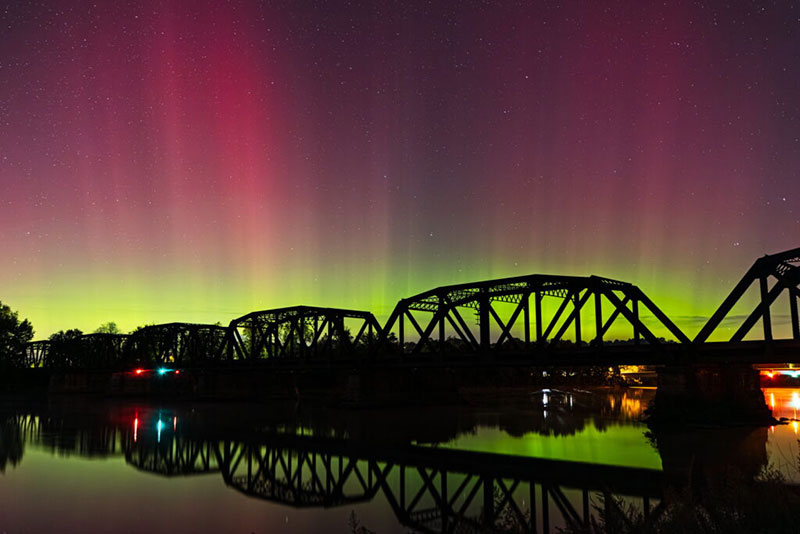
While the aurora borealis—or Northern Lights—are usually seen closer to the Arctic, strong solar activity can occasionally make it visible much farther south, even in NEPA and the Susquehanna Greenway. These shimmering curtains of green, pink, or red light are caused by charged particles from the Sun colliding with Earth’s atmosphere. Predicting their visibility relies on solar activity forecasts, particularly the Kp index, which measures geomagnetic disturbances. At a Kp index of 5, auroras can sometimes be seen in northern Pennsylvania if skies are clear and dark; however, the higher the index the better the likelihood of visibility. (For example, the Kp index reached a Kp of 8, a severe geomagnetic storm, during the October 2024 northern lights event.)
Explore the Night Sky in Your Region
To increase your chances, head to spots along the Susquehanna Greenway with minimal light pollution, check aurora forecast websites or apps, and keep your eyes on the northern horizon after dark. Even a brief appearance can turn an ordinary night sky into a magical, otherworldly experience. To monitor the Kp index in real time and check aurora forecasts, a reliable source is the NOAA Space Weather Prediction Center (SWPC). You can also consider the My Aurora app, which provides best locations for viewing, forecast updates, maps, webcams, and more.
Pro Tips
For an unforgettable night under the stars, timing and preparation make all the difference. Here are some considerations to keep in mind:
- Pick the right moon phase: A new moon offers the darkest skies for spotting faint stars and meteors, while a full moon is ideal for admiring moonlit landscapes.
- Gear: Most celestial events can be enjoyed with just your eyes, though binoculars or a telescope can help you zoom in on planets or the Moon.
- Give your eyes time to adjust: Spend at least 30 minutes away from bright lights and use a red flashlight to preserve your night vision.
- Find a dark, open spot: Choose a location far from light pollution along the Greenway for the clearest views.
- Stay comfortable: Bring warm layers, a blanket, and a hot beverage for comfort while you watch.
- Capture the magic: Explore resources on meteor shower photography or try night-sky photography with your phone using long exposure settings or specialized apps.
With the right timing, a dark sky, and a little patience, the night sky along the Susquehanna Greenway can turn any evening into a celestial adventure—so bundle up and look up, NEPA!
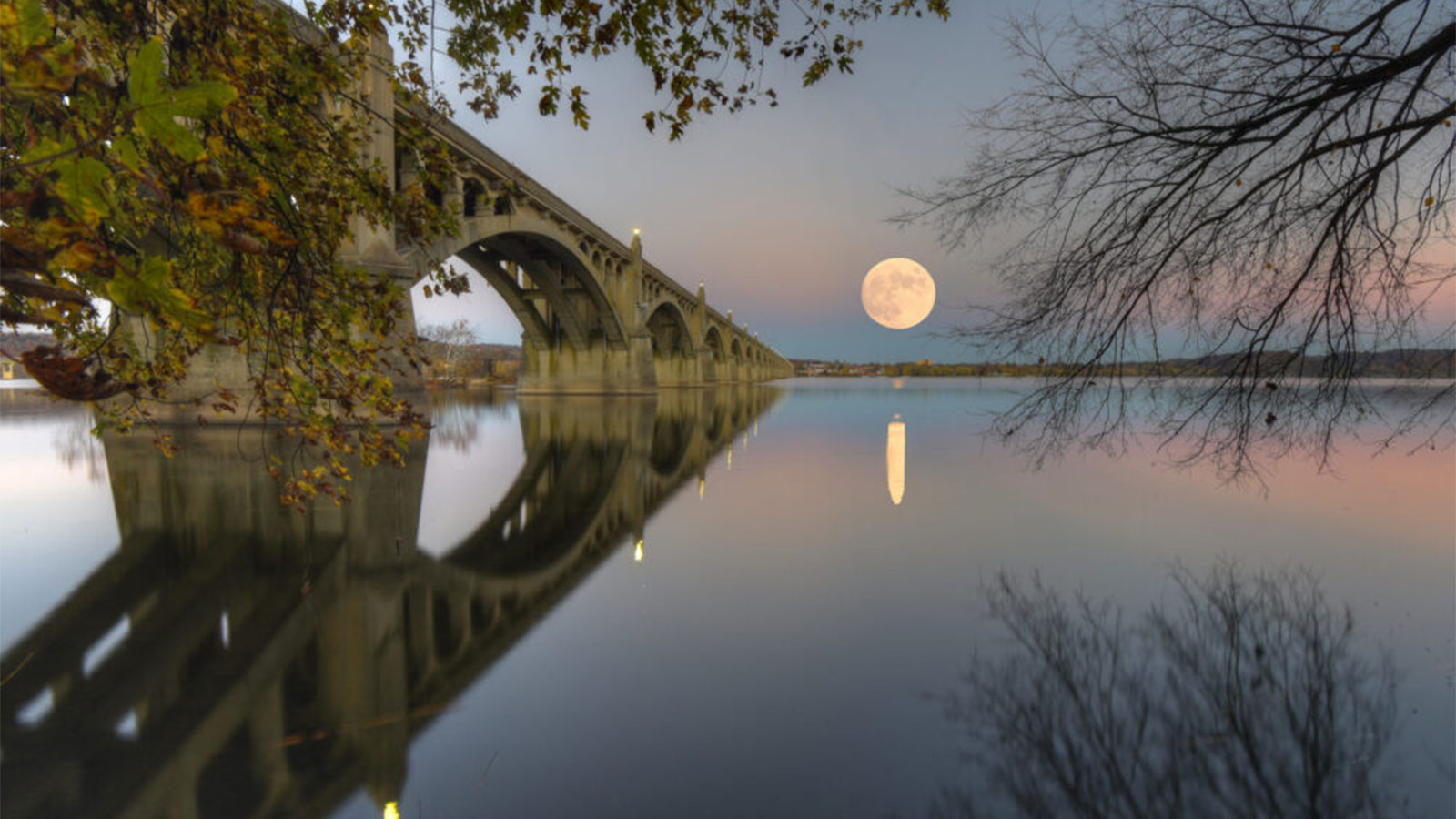
Featured image (top): Columbia Moonrise. Photo courtesy of George Kurzik.