















Winter Bald Eagle Watching in the Pocono Mountains
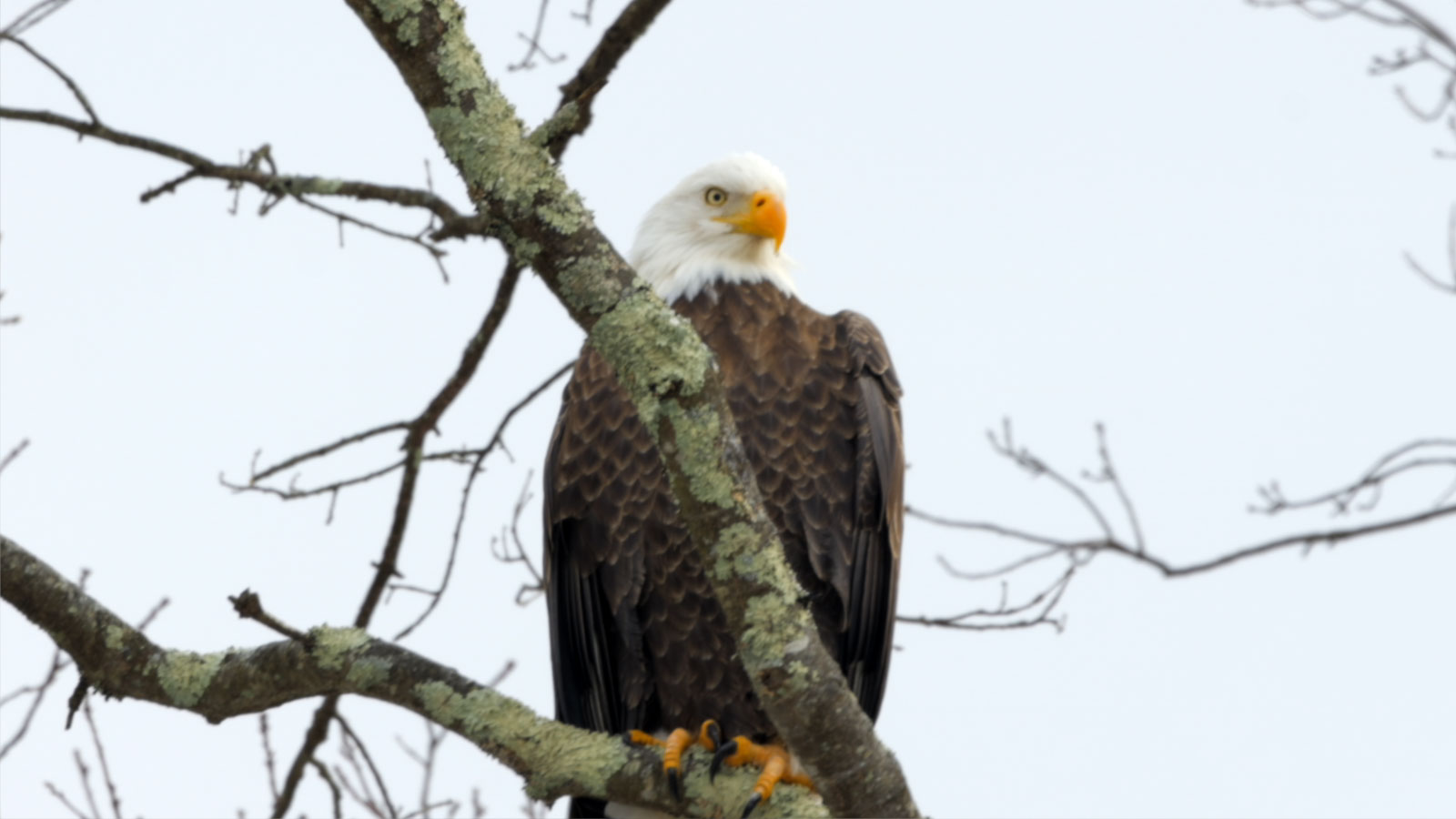
Each winter, an estimated 150–200 bald eagles migrate to the Upper Delaware River Scenic and Recreational River, where the region’s warmer open waters and quiet forests of the Pocono Mountains offer ideal feeding and roosting conditions. As northern lakes freeze, the iconic raptors travel hundreds of miles south to spend the season in Northeastern Pennsylvania and New York.
And each year, their presence draws thousands of visitors for the Delaware Highlands Conservancy’s annual Eagle Watch. From crisp riverside overlooks to frosty forest perches, spotting a wild bald eagle in this pristine winter landscape is an unforgettable NEPA experience.

From Threatened to Thriving
Once on the brink of extinction, the bald eagle has made a remarkable recovery in Northeastern Pennsylvania and across the U.S. In 1983, the Pennsylvania Game Commission documented just three remaining nests in the state. It was a dire reflection of widespread habitat loss and the devastating effects of environmental neglect. Thanks to intensive restoration efforts in the 1980s, eagle populations steadily rebounded.
Today, Pennsylvania is home to more than 300 active nests. And what was once a rare sight has become a celebrated winter tradition through the annual Eagle Watch.
“Every year, people are just so excited to get to see eagles in the wild,” said Bethany Zarnowski, Operations and Communications Director at the Delaware Highlands Conservancy. “For many people, they remember when it was really uncommon to see them. It’s great to see that enthusiasm—from kids and adults alike—year after year.”
How to View the Eagles
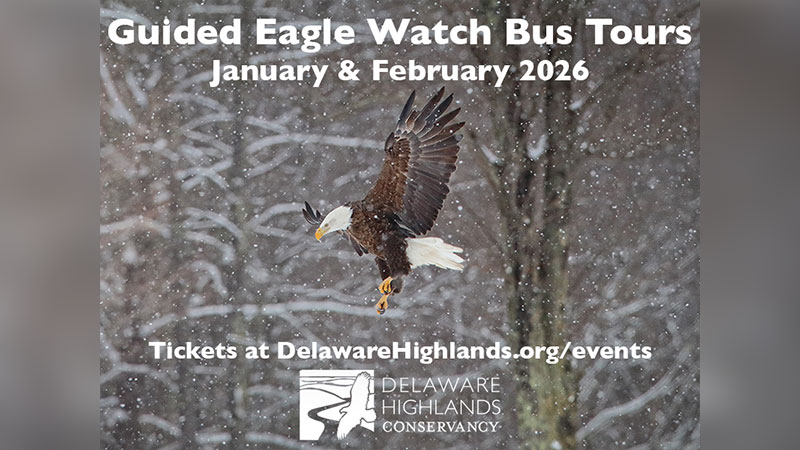
Winter 2026 Eagle Watch Bus Tours
Tour Dates:
January 3, 10, 17, 24, 31
February 7, 14
Snow dates: The Sunday following each scheduled tour.
Tour Time:
10:00 AM – 3:00 PM
Starting Location:
Conservancy’s Winter Field Office
Zane Grey Museum
135 Scenic Drive, Lackawaxen, PA
Tour Itinerary Highlights:
Guided eagle-viewing experience aboard a heated bus.
Scenic drive through the Upper Delaware River region.
Stops at designated Eagle Observation Areas.
Learn from an expert guide about bald eagles and their habitat.
Fees:
$25 for Delaware Highlands Conservancy members
$35 for non-members
Children under 12: Free
Refunds not provided for cancelled reservations or no-shows.
Reservations Required:
Tickets available at DelawareHighlands.org/events
Or by phone: 570-226-3164 / 845-583-1010
Seats are limited; advance booking recommended.
Eagle Watching on Your Own
Visitor Center Location:
Zane Grey Museum
135 Scenic Drive, Lackawaxen, PA
Visitor Center Hours:
Saturdays and Sundays in January & February
10:00 AM – 3:00 PM
What’s Available at the Visitor Center:
Maps and directions to eagle viewing sites
Information on bald eagles in the Upper Delaware River region
Short educational film
Interpretive exhibits
Staffed by Conservancy volunteers
Self-Guided Viewing Areas:
Well-marked Eagle Observation Areas across PA & NY
Operating Partners: National Park Service / NYS Dept. of Environmental Conservation
Staffed by volunteers on weekends throughout winter
Binoculars and spotting scopes available for public use
More info: DelawareHighlands.org/Eagles
Quick Tips:
Look for marked observation areas at top eagle hotspots (see their map for locations).
Best chance of sightings – early morning / late afternoon.
Conservancy volunteers at observation sites — they’ll help you spot eagles.
Follow the Conservancy’s tips for eagle-viewing etiquette to avoid disturbing wildlife.
Dress warmly, bring binoculars and always prioritize respecting nature.
Support Delaware Highlands Conservancy
The Delaware Highlands Conservancy plays a vital role in protecting the forests, farmland and clean waters that support bald eagles and countless other species in the Upper Delaware River region. By partnering with local landowners, the Conservancy has safeguarded more than 19,000 acres, including the 144-acre Van Scott Nature Reserve in Beach Lake.
The Conservancy welcomes community involvement in many ways. Volunteers can assist with stewardship monitoring, educational outreach, office support or the popular winter Eagle Watch program. Supporters can also make a lasting impact by donating monthly; recurring gifts protect clean waters, working farms and forests, wildlife habitat and educational programs. To get started, simply complete the Volunteer Registration Form.

Article Updated from its Original Version Published on 1/10/22.
Eagle Watching with Delaware Highlands Conservancy

Eagle Watch