


















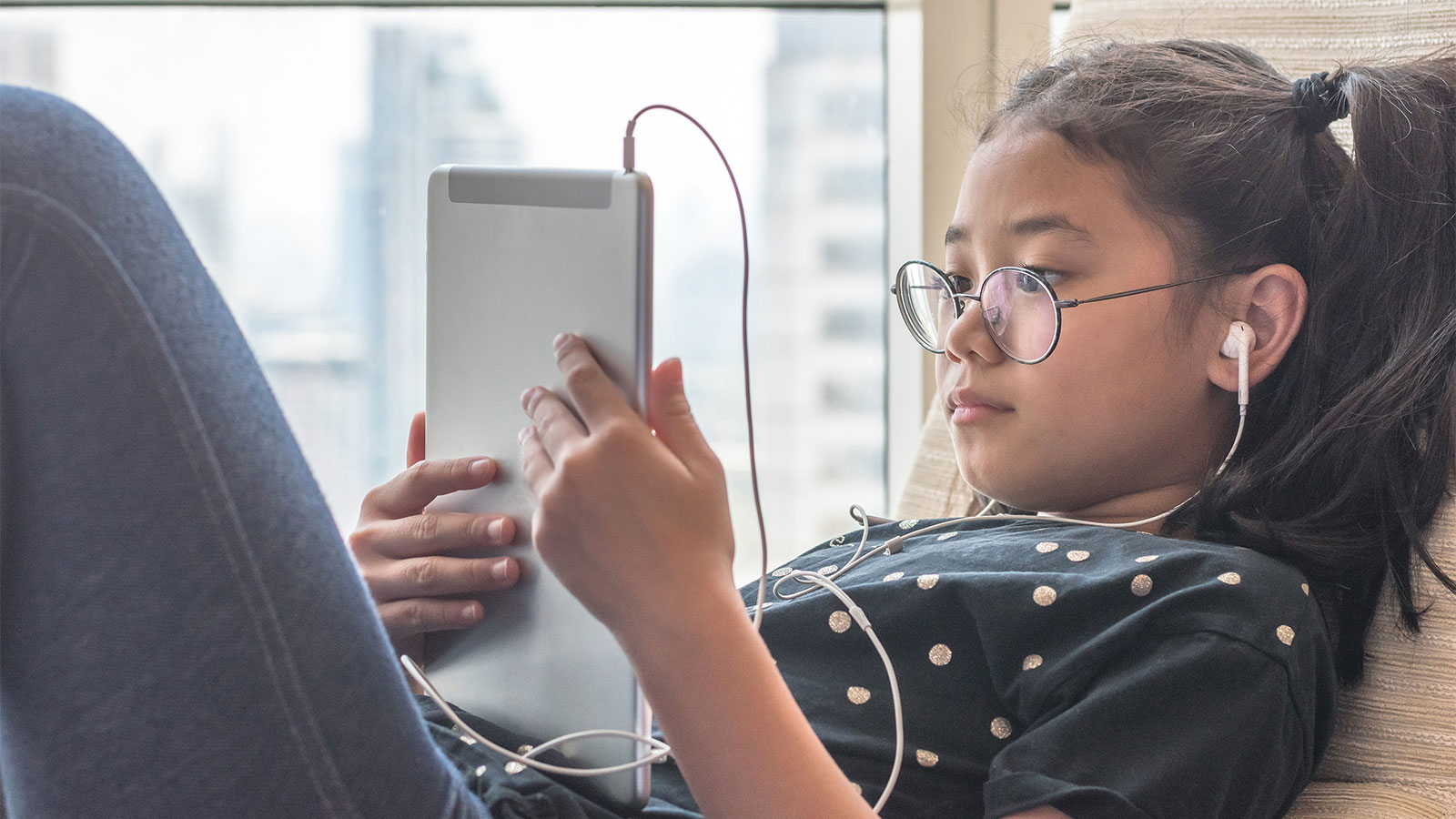

Screens Aren’t All Bad, but Too Much Screen Time can Lead to Problems
For today’s kids, it’s never been easier to be entertained, educated and connected — and all from the palm of their hands.
But as kids increasingly turn to screen time for their favorite shows, music, social media, gaming, homework, the latest news and more, many parents are left wondering: How much screen time is too much?
On average, kids spend about 7.5 hours on screens each day. Screens aren’t inherently bad — they can teach, entertain and keep kids occupied. But too much or the wrong content can lead to health problems.
“There is no one magic number that applies to all children and teens,” says Thomas Challman, MD, neurodevelopmental pediatrician and medical director of Geisinger’s Department of Developmental Medicine. “Instead, it’s about achieving a balance between online and offline activities for the well-being of kids’ physical and mental health. Too much screen time takes away time with family and friends, playing outside, socializing with friends and eating together.”
So how can families set realistic boundaries? By taking into account recommended guidelines and encouraging healthy screentime habits.
Screen Time Recommendations by Age
The American Academy of Pediatrics (AAP) recommends the following screentime guidelines by age for recreational use:
- Under 2 years: Avoid screen time, except for video chats with family or friends, to encourage active play and direct interactions.
- Ages 2 – 5: Limit screen time to one hour per day and focus on high-quality content that encourages learning and engagement. Co-viewing with a caregiver is recommended.
- Ages 6+: No more than 2 hours each day, except for homework, to prevent interference with sleep, physical activity and face-to-face social interaction.
Young children are rapidly developing, and too much screen time can impact their ability to learn language, problem-solving, social and motor skills. For older children and teens, instead of a specific time limit, balancing screen activities with vital offline activities like homework, physical play and family time is emphasized.
The AAP also recommends parents consider the quality of screen time interactions and not just the quantity of time spent on them — all screen time is not created equal.
“The quality of media kids are exposed to may be more important than the amount of time spent on them,” says Dr. Challman. “Screen time for homework or other educational purposes can boost learning and help build literacy and math skills, but too much recreational screen time like video games and social media can impact the development of skills for planning, focusing, solving problems and even controlling emotions.”
Health Effects of too Much Screen Time
Excessive screen time can lead to reduced physical activity and social interaction.
And unfortunately, prolonged screen exposure to poor-quality content has been linked to health issues in children, including:
- Anxiety and depression
- Body image issues
- Developmental delays in language and social skills
- Behavioral issues
- Obesity
- Inadequate sleep, affecting health and concentration in the classroom
Setting boundaries and encouraging diverse activities can help make sure your kids benefit from technology, while minimizing the negative effects of too much screen time.
5 Tips for Reducing Screen Time
So, what’s the secret to encouraging healthy screen time? It’s all about balance.
“Positive and healthy screen use is possible by keeping screen time purposeful and moderating recreational use,” says Dr. Challman.
He offers 5 tips for reducing screen time:
- Create a family media plan. As a family, set specific guidelines for screen use and content. You can start by determining how much screen time is too much based on your kids’ ages and individual needs, and then have a family discussion to set reasonable goals and time limits.
- Use tools to enforce time limits. Set up parental controls or apps to limit screen usage and monitor appropriate content. Or, simply set a timer to monitor screen time each day.
- Create “screen-free zones.” Designate certain areas device-free like bedrooms and the dinner table to help create a healthy balance and avoid sleep disturbances.
- Encourage offline activities. Urge your kids to pick up a new hobby or activity like crafting, playing an instrument or a new sport. Or, schedule game nights, outings to local parks or start a family book club. These offline activities can stimulate creativity and get your kids moving their bodies.
- Support social interaction. To get your kids engaging with their peers in person, schedule playdates for younger kids and encourage older children to participate in group activities like school clubs and other extracurriculars.
It’s important to model the behavior you want to see in your kids — and follow your family rules, too. If you set a device curfew for 8 p.m., it’s difficult to enforce if you’re on your phone after that agreed-upon time.
“Your child — and yes, even your teen — is watching you for cues on when and how to use screens,” says Dr. Challman. “If you’re mindful of your own screen habits and showcase balanced usage, you’ll lay the groundwork for healthy media habits that will benefit your kids in the long run.”