
















Explore NEPA’s past at the River Street National Historic District
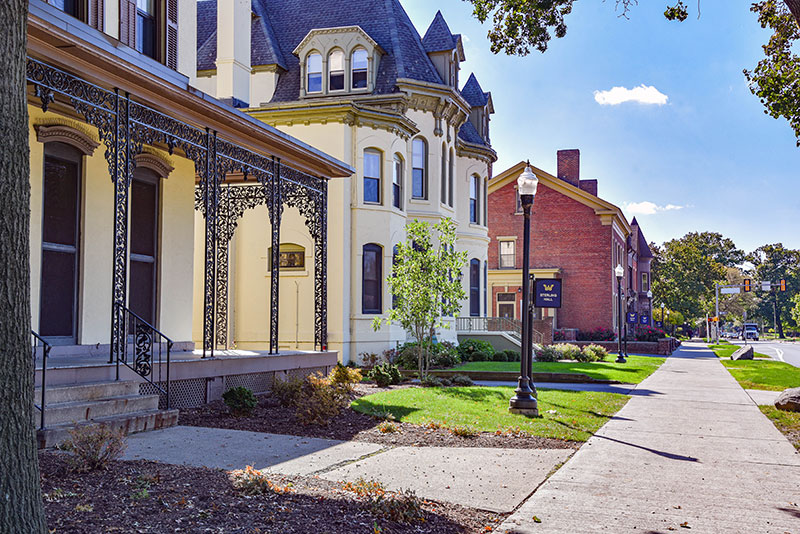
The River Street Historic District in Wilkes-Barre, PA, is a testament to the city’s rich architectural heritage and historical significance. Established in 1985, the district encompasses approximately 191 acres and features over 250 buildings constructed between 1860 and 1930. The center city district parallels the Susquehanna River.
Architectural Significance
The district showcases a diverse array of architectural styles, including Gothic Revival, Beaux Arts, and Queen Anne. Notable structures include:
- Luzerne County Courthouse: An exemplar of Beaux Arts design, serving as a focal point of civic architecture.
- Irem Temple: A distinctive building reflecting the district’s unique architectural character.
- St. Stephen’s Episcopal Pro-Cathedral: Designed in the Romanesque Revival style by architect Charles M. Burns, this church was completed in 1897 and consecrated in 1899.
- McClintock Hall: Built around 1841, this Greek Revival structure was later adapted for use as a dormitory for Wilkes University.
- Catlin Hall: Constructed in 1843, this Greek Revival building also serves as a dormitory for Wilkes University.
- Weiss Hall: Dating to circa 1895, this building exhibits a blend of Queen Anne and Romanesque styles.
- 253 South Franklin St.: Residence visited by President Franklin Delano Roosevelt in the aftermath of the 1936 flood.
Historical Context
The River Street Historic District reflects Wilkes-Barre’s prominence during the height of the anthracite coal industry. The area was predominantly developed by wealthy industrialists and merchants, with the architecture mirroring their affluence and aspirations. The district is organized around a central core of civic and financial institutions, highlighting the social hierarchy and economic dynamics of the period. Today, the district offers a window into the city’s past, providing insights into its architectural evolution and the historical forces that shaped its development.
River Street National Historic District in Wilkes-Barre preserves the city’s legacy through its streetscape and enduring landmarks.
Featured Site on the Wilkes-Barre Walkitecture Tour